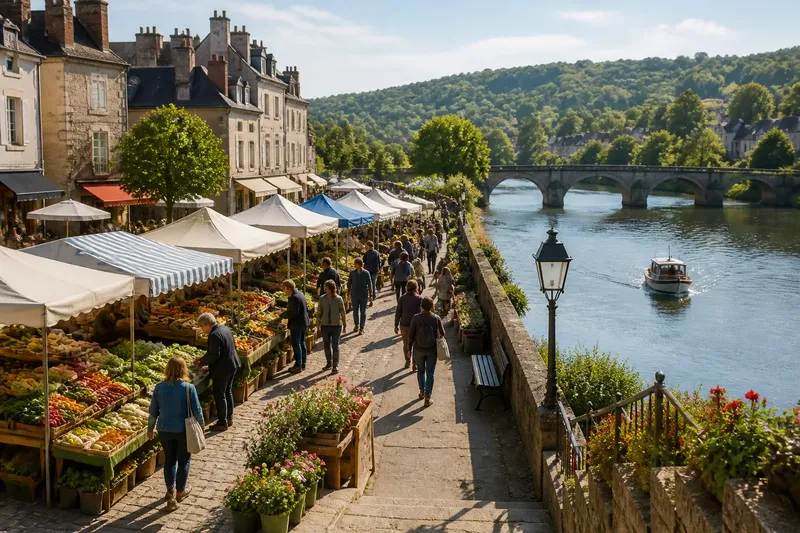
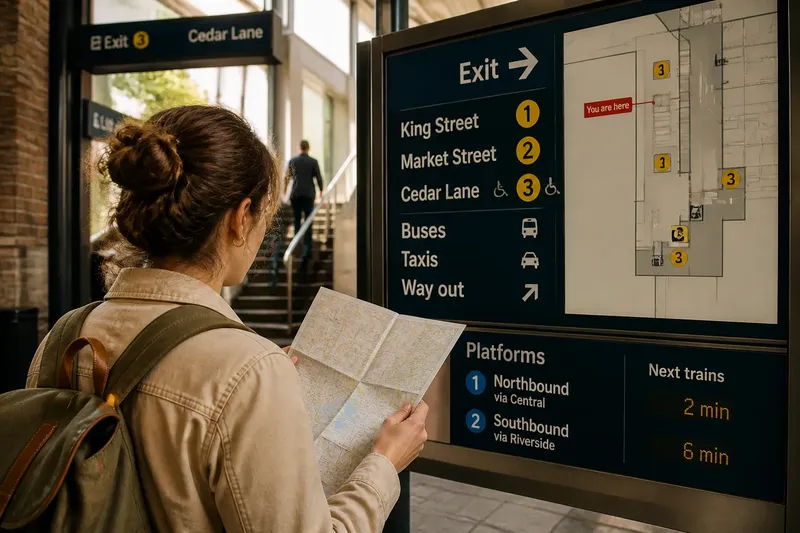
A First Morning in an Unfamiliar Town
A first morning in an unfamiliar town can reveal the character of its streets and daily routines, helping you choose a more rewarding way to spend the day.
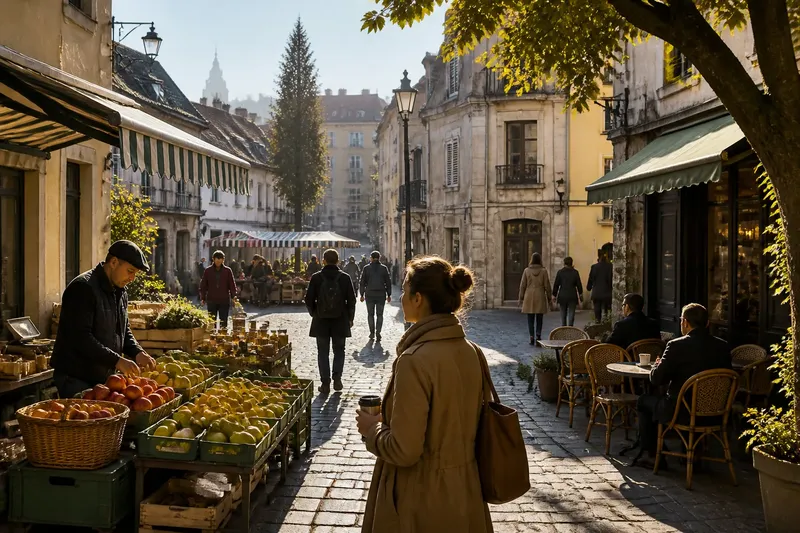
A first morning in an unfamiliar town is a chance to notice how the place works before deciding what deserves your attention. Instead of tracing a route between landmarks, pay attention to the everyday details: which businesses are opening, where people pause, and how the street changes from one doorway to the next.
This kind of close looking is different from finding your bearings. It is about reading the town’s daily rhythms and public life, then choosing how you want to spend time within them. A bakery window, a market stall being arranged, or the sound of chairs scraping across a café floor may tell you more about the morning than a list of attractions.
What can an ordinary street tell you?
Look for transitions. A street with cafés and small shops may give way to residential buildings; a busy corner may open onto a quiet courtyard or a public garden. Notice where people walk briskly, where they linger, and whether the street offers a comfortable place to sit.
These details help you distinguish a place to pass through from one where you might want to spend time. A broad sidewalk with benches may suit a slow coffee, while a narrow, noisy road may be better treated as a route to somewhere else. Watch for practical cues, too: open public restrooms, shade, water fountains, and signs showing where visitors can enter.
How do you read a town’s morning rhythm?
Pay attention to what is happening now rather than assuming the same scene will continue all day. A market may be setting up, a café may be serving mostly commuters, or a square may still be quiet. These observations can suggest when to return, but they are not promises about later hours.
Notice who uses a space and how. Are people meeting friends, carrying groceries, walking dogs, or sitting alone with a newspaper? You can observe without treating residents as scenery: keep doorways clear, avoid photographing people without permission, and respect signs at religious sites, courtyards, and residential buildings.
Say you step into an invented town on a cool morning and see market sellers arranging apples while nearby cafés fill with people heading to work. You decide to browse the market first, buy a snack from a stall, and return to a café after the commuter rush has thinned. The result is a morning shaped by what you actually observed, with a quieter place to sit afterward.
How can you choose where to linger?
Choose a spot based on the experience you want, not simply its prominence on a map. If you want to watch daily life, a public square or market may suit you. If you want calm, look for a garden, a library with a public reading area, or a café set away from a busy road.
Before settling in, check whether the space is open to visitors and whether you can use it without disrupting others. Follow posted rules, ask before taking photos in a private business, and choose another spot if the setting feels intrusive. A good place to linger should feel comfortable for you and appropriate for the people who use it every day.
What small questions help you read a place?
How can you tell whether a square is public?
Look for posted access rules, public seating, and signs identifying the space or its hours. If it appears attached to a private venue or residential building, check with staff or choose an unmistakably public area instead.
What should you notice in a local market?
Notice how stalls are arranged, what kinds of goods are sold, and whether shoppers browse or move quickly. Keep pathways open, follow any photography rules, and ask before handling items.
How do you find a quiet place to pause?
Look for a public garden, a bench away from traffic, or a café where lingering seems welcome. If a space is crowded or marked for a specific use, keep moving and look for another option.
What if the town seems quiet?
Quiet is still useful information; businesses may open later, or activity may gather elsewhere. Check posted opening hours or a local noticeboard, then choose an open public place to sit rather than assuming you have missed the town’s character.
How do you turn observations into a satisfying day?
Use what you noticed to choose a mood for the next part of the day. If a market caught your interest, stay nearby for lunch. If a public garden offered the calm you wanted, spend time there before deciding whether to visit a museum or return to your lodging. You do not need to turn every observation into another stop.
- Notice whether a café has open seating; if it does and you want a pause, stop for a drink, but if it is crowded, choose another place nearby.
- Check whether a market is active; if stalls are open and browsing interests you, take a look, but if setup is still underway, return later or continue elsewhere.
- Look for benches in a public space; if seating is available and the area welcomes visitors, rest there, but if it is reserved or crowded, find a different public spot.
- Observe the noise and traffic beside a street; if it feels comfortable for a meal, choose a nearby café, but if it is too loud, seek a quieter side street.
- Read posted access rules at a courtyard or garden; if visitors are permitted, enter respectfully, but if access is restricted or unclear, stay outside and choose an open space.
- Check a venue’s current hours before walking there; if it is open and suits your interests, go, but if it is closed, pick a nearby alternative or save the visit for another time.
A first morning in an unfamiliar town need not reveal everything. Notice one setting that feels welcoming, one detail that makes you curious, and one place you would like to revisit. Those observations can make your next choice feel personal rather than automatic.