Loop, Out-and-Back or Point-to-Point? Choose a Route Shape for Your Day
Compare a loop, out-and-back, and point-to-point route to match your day’s start, turning point, and return with the time and energy you have.

A loop, out-and-back, or point-to-point route changes how a day begins, where its turning point falls, and what getting back requires. If you are choosing a route shape for a day trip, start with the ending: do you want to finish where you began, retrace familiar ground, or arrive somewhere new?
That choice matters more than a map’s neat geometry. A loop can make a day feel self-contained, an out-and-back gives you a natural moment to turn around, and a point-to-point route lets the day move onward. Each suits a different mix of energy, transport, and appetite for uncertainty.
When does a loop fit best?
Choose a loop when you want a complete outing with a return to the same base, and you have a plausible way to connect the final stretch to the start. The shape is especially useful when a town, park entrance, or transit stop makes a convenient beginning and ending point.
A loop gives the day a quiet narrative: set off, reach a far side or central turning point, then come back by another way. That second half can feel fresh without requiring you to solve a new arrival. But a route that looks circular on a screen may rely on a closed gate, an awkward road shoulder, or a footpath that does not connect as expected. Check the links that make it a loop, not just its outline.
A loop fits less well if the return leg would make you hurry through the place you most want to linger. In that case, shorten the circuit or choose an out-and-back with a clear turn point. The best loop is not the largest one; it is the one whose final stretch still feels like part of the day.
When is an out-and-back the calmer choice?
Pick an out-and-back when the way out is appealing on its own, when you want a simple decision about how far to go, or when a reliable return to your starting point matters. The turning point can be a viewpoint, a village, a waterside stop, or simply the moment your interest or energy begins to fade.
Retracing a route is not automatically repetitive. The light, traffic, and perspective can change, and familiar landmarks can make the return easier to read. It also avoids the need to find a separate connection at the far end. That can be a real advantage on a short break where missing a bus or reaching a closed entrance would complicate the rest of the day.
The trade-off is that the return is part of the route, not an afterthought. If the outward leg already feels long, the same ground back may feel longer still. Set a turning point that leaves room for the return, a pause, and any delay; do not decide to continue simply because the map shows more trail.
Who benefits from point-to-point?
A point-to-point route fits travelers who want the day to end somewhere different from where it began and have a dependable way to handle that change. It can suit a day that links two neighborhoods, villages, or transit stops, especially when the onward destination is itself part of the plan.
Its beginning is often practical rather than ceremonial: start where transport drops you, then let the route carry you toward a meal, a station, or a place to stay. The turning point may be less obvious than on an out-and-back, so decide what counts as “enough” before you set out. That might be reaching the next settlement, seeing a particular landscape change, or arriving with time to spare for the onward connection.
Point-to-point is a poor fit if the final transfer is uncertain or if leaving a bag, vehicle, or companion behind creates a problem. Check how you will reunite with your starting point, and what happens if you arrive later than expected. The route can be wonderfully direct, but its ending depends on more than the path itself.
Which route shape fits your situation?
Which route shape works when I need to return to my car?
A loop is usually the natural fit if a connected route is available and you want to see new ground on the return. Choose an out-and-back instead if the loop’s connecting paths are uncertain or the route is easiest to follow in one direction.
Is an out-and-back better for an uncertain day?
Often, yes: you can turn around when the weather, energy, or schedule calls for it. Decide on a landmark or a comfortable time to turn rather than treating the farthest possible point as a target.
When should I choose a point-to-point walk?
Choose it when your planned finish is a useful destination and you can arrange onward transport or a pickup. It is less suitable when the return connection is an afterthought or the day’s timing is hard to predict.
Can I combine route shapes in one day?
Yes. For instance, a short out-and-back from a town can lead into a point-to-point stroll through its center, provided the transitions are clear and do not make the day feel rushed.
How should the turning point shape the day?
The turning point is not always the route’s farthest spot. It is the moment when the day’s purpose changes: a pause becomes a return, a walk becomes a transfer, or a scenic stretch gives way to getting somewhere on time. Name that moment in ordinary language before leaving. “Turn back after the overlook” is more useful than “go until it feels right” if you have a train to catch.
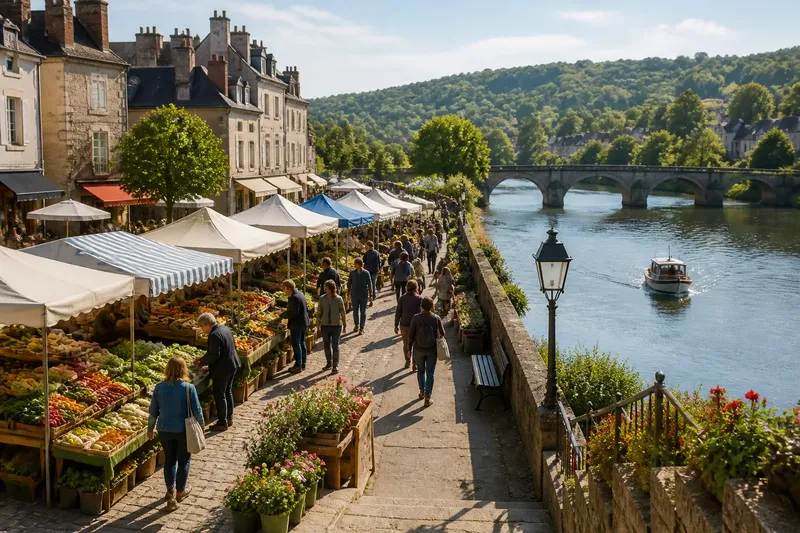
Say you are staying in a small town, with a bus connection at the far end of a riverside path that runs longer than you want to walk. Imagine deciding in advance to reach a footbridge, pause there, and return by the same path if the bus timing looks tight; if the connection is comfortable, continue to the next stop. The observable benefit is a clear choice at the turning point, rather than a hurried debate halfway along the route.
What should you check before settling on a shape?
Compare more than distance. A compact loop with a confusing junction can ask more of you than a longer out-and-back, while a point-to-point route may be easy to follow but hard to leave if transport changes. Look at the route’s actual surface, access points, crossings, and likely stopping places, then match those details to your day.
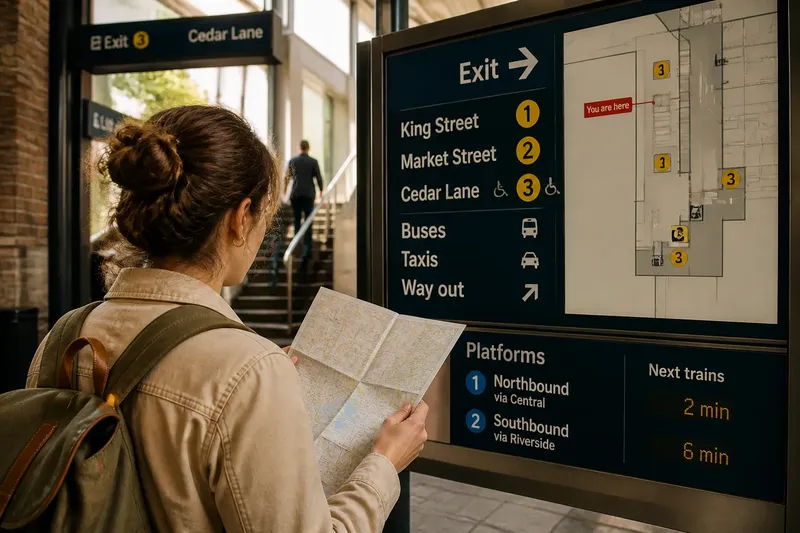
- Starting and finishing places: Can you reach the start easily, and does the finish leave you where you want to be?
- Return plan: For a loop, are the connecting paths continuous? For point-to-point, is onward transport workable?
- Turning point: Is there a clear place or cue to pause, turn back, or continue?
- Route texture: Would a repeated path feel reassuring or dull, and are any links awkward to follow?
- Room to linger: Does the shape leave space for a long stop or a slower-than-planned return?
When a route depends on access, transit schedules, or local restrictions, confirm the current details with the relevant operator or local source. Then choose the shape that makes the end of the day feel manageable, not merely the one that draws the prettiest line. A good route shape for a day trip leaves you knowing where the day turns—and what you will do next.